 Press KitPress Kit
This press kit brings together historical evidence, official documents, recent institutional actions and source-based analysis to help international journalists understand why the June 10 ceremony has become a political and cultural dispute over Antoni Gaudí's legacy — and how the broader institutional framing of Gaudí as a Spanish national symbol risks erasing the Catalan language, culture and identity that shaped him.
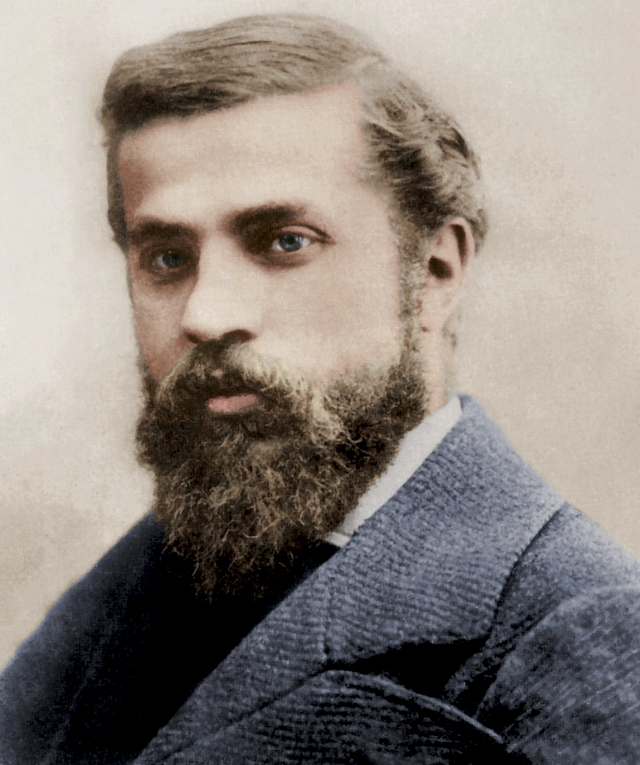 "Speaking Catalan, for us, is an obligatory tribute to our origins."
 Press headline · 2026
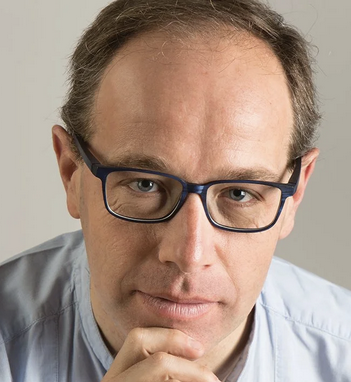 "The blessing of the Tower of Jesus Christ should be conducted in Catalan. It is the language in which Gaudí expressed himself."
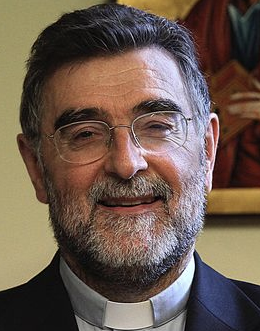 "Gaudí is inseparable from Catalonia, because his work is inseparable from his faith and his land."
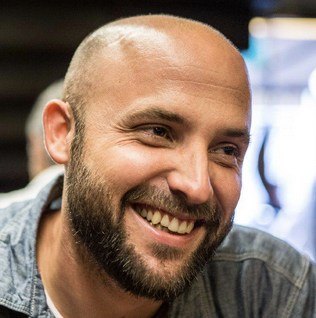 "To bless this tower in Spanish is to dismantle everything Gaudí built — a path to universal faith constructed from local material. He would have taken it as an insult."
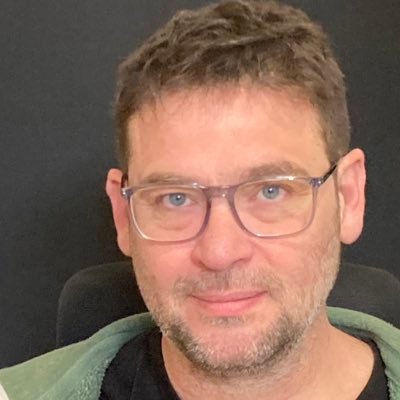
OCTUVRE is an independent, reader-funded investigative journalism organisation based in Barcelona, Catalonia. Founded and directed by investigative journalists Albano Dante Fachin and Marta Sibina Camps, and free from corporate or political party funding, OCTUVRE focuses on institutional transparency, public expenditure tracking, and cultural accountability.
June 10, 2026. Pope Leo XIV blesses the Tower of Jesus Christ at the Sagrada Família in Barcelona — Christianity's tallest tower, 175.5 metres. The date coincides exactly with the centenary of architect Antoni Gaudí's death. The ceremony will be broadcast worldwide.
The official Vatican missal designates the blessing — the central symbolic act — to be conducted entirely in Spanish (Castilian). Catalan, the language in which Gaudí lived, worked, prayed and was arrested for refusing to abandon, will have a residual role in the ceremony. Spanish state institutions have conducted a series of actions framing Gaudí as a Spanish national icon, contradicting the historical record. The marginalisation of the Catalan language in the papal ceremony is generating an intense controversy across Catalan society. Parishes, political parties, former Presidents of Catalonia and even FC Barcelona have all reacted. Catalonia waits in tension to see whether the Pope will respect the language of Gaudí and Catalan society.
On September 11, 1924, under the dictatorship of Primo de Rivera — backed by King Alfonso XIII, a Bourbon — Antoni Gaudí, 72 years old and the most celebrated architect in Barcelona, tried to enter a church.
Spanish police blocked the door. They ordered him to speak in Spanish.
He refused.
"Jo parlo català perquè sóc català.
I speak Catalan because I am Catalan."
— Antoni Gaudí, to Spanish police, September 11, 1924. Documented in César Martinell's memoir and other independent contemporary sources. [7] [8]
He was arrested and fined. Gaudí died two years later, on June 10, 1926. His temple was unfinished.
One hundred years later, on June 10, 2026, the Tower of Jesus Christ — the tallest spire of the Sagrada Família, the building Gaudí gave his life to — will finally be blessed.
The ceremony will be conducted in Spanish.
Catalan — the language in which Gaudí designed, prayed, argued and refused to be silent — will have a marginal presence. The organisation of the visit was coordinated through Madrid, according to the director of Catalunya Religió, who told RAC1: "All dialogue went through Madrid."[9] The Barcelona Archbishopric refused to place Catalan flags between the towers. "De cap manera" — absolutely not.[17]
Sitting in the front row will be King Felipe VI and Queen Letizia — representing the Spanish Crown.
Felipe VI is the great-grandson of Alfonso XIII — the Bourbon king who backed the dictatorship that arrested Gaudí for speaking Catalan.
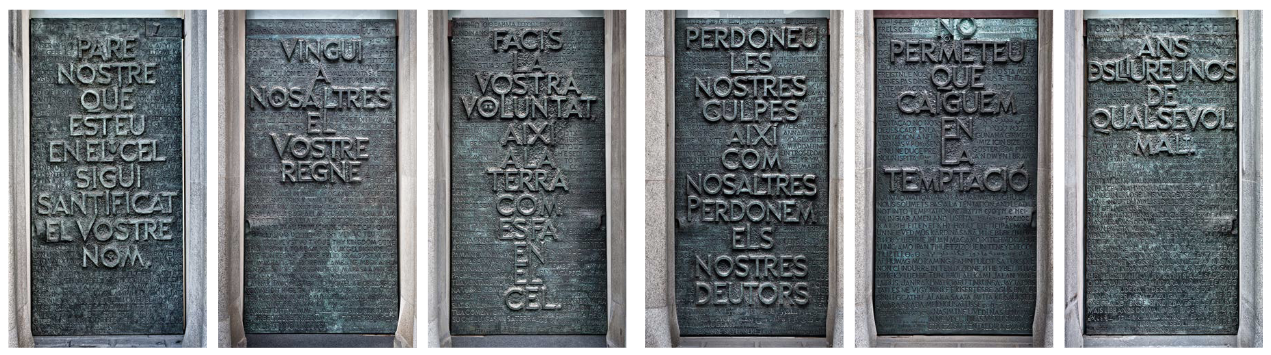
"The arc is complete. Except it isn't. Because Gaudí's name is carved into the walls of that temple... and the Lord's Prayer is written on the doors of the Sagrada Família. In Catalan."
The dispute over language at the June 10 ceremony is not a minor logistical detail. It is a direct expression of how a global event is being institutionally framed. A series of documented actions by Spanish state institutions, official cultural bodies and the Spanish Episcopal hierarchy point to a sustained effort to present Gaudí as a Spanish national symbol — an effort that contradicts the historical record and risks erasing the Catalan identity that shaped him. OCTUVRE considers this a matter of cultural accuracy, not political allegiance.
International news wires operate under strict standards of geographic and historical accuracy. The following reference table contextualises common formulations regarding Antoni Gaudí and the Sagrada Família, offering documented baselines to help correspondents maintain factual rigour.
| ✗ Avoid | ✓ Better |
|---|---|
| Spanish architect Antoni Gaudí… | Catalan architect Antoni Gaudí… (He was born in Reus / Riudoms, Catalonia, and identified as Catalan throughout his life) |
| Spain's Sagrada Família… | Barcelona's Sagrada Família… or: the Sagrada Família basilica in Barcelona, Catalonia… |
| Gaudí, one of Spain's greatest cultural icons… | Gaudí, the Catalan architect whose work has become one of the world's most visited architectural landmarks… |
| The Spanish masterpiece / Spain's architectural heritage… | A Catalan Modernista work, the Sagrada Família was designed by Gaudí as a deeply Catalan and Catholic expression… |
| Antonio Gaudí (his name in Spanish)… | Antoni Gaudí (his Catalan name). The Castilianised form "Antonio" appears in official Spanish documents of the era due to administrative rules, not personal choice. |
Using "Spanish architect" without contextualisation is not neutral — it reproduces a specific political framing that the historical record does not support. Correspondents who describe Gaudí accurately are not taking sides; they are applying the same standard of factual rigour they would to any other cultural or historical figure.
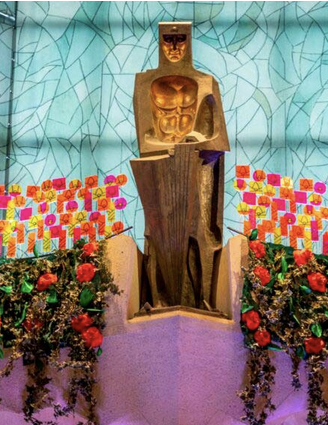
Josep Maria Subirachs
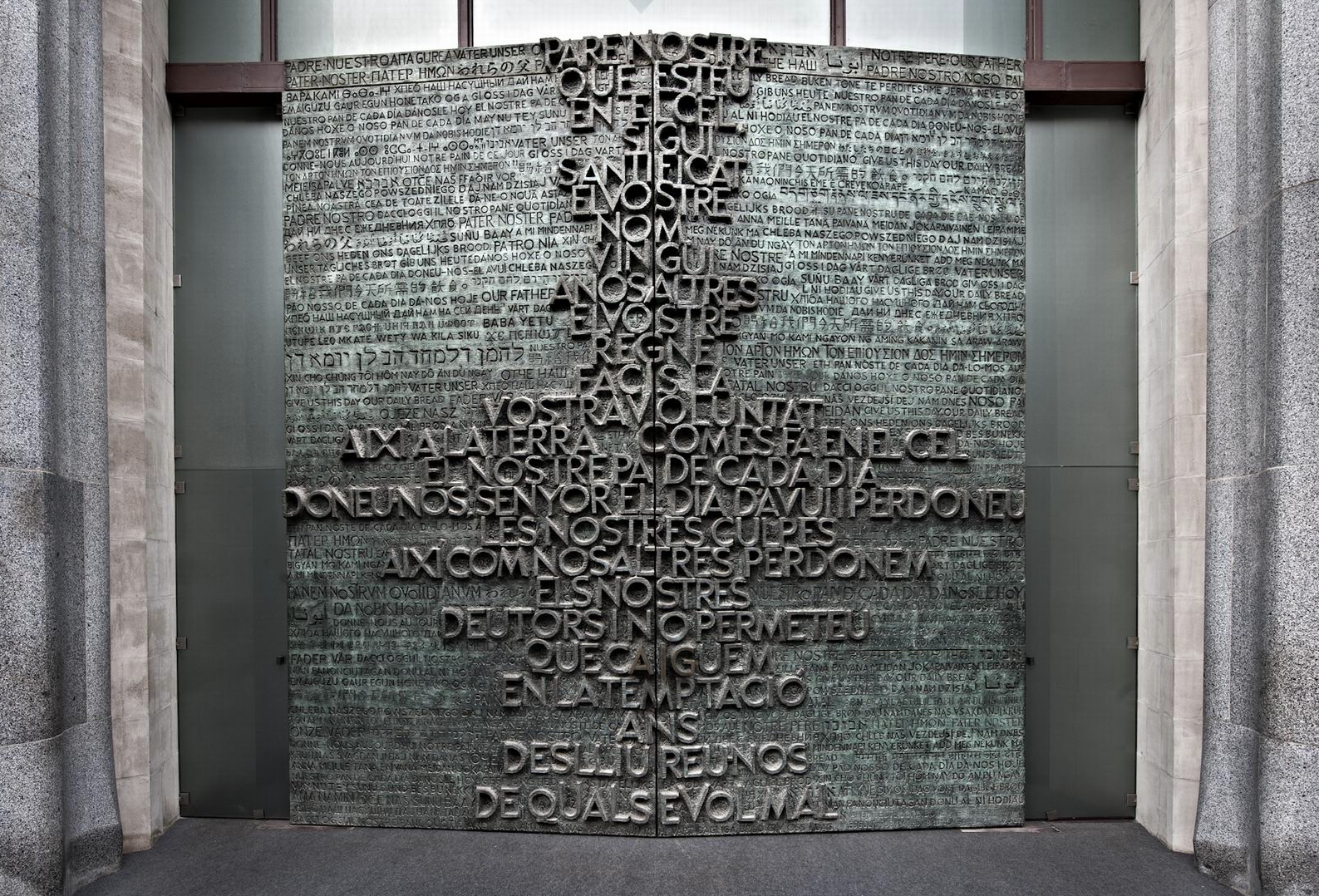
While overt political symbolism was constrained by the building's sacred purpose, Gaudí embedded Catalan identity throughout the Sagrada Família in documented, visible ways.
The names of the apostles, saints and liturgical inscriptions are in Catalan — not in Latin or Spanish. The Lord's Prayer, carved into the stone, is in Catalan. Contemporary Spanish nationalist press labelled Gaudí's work "arquitectura separatista" as early as 1906–1907. [17]
The iconographic programme includes sculptures dedicated to saints with deep Catalan roots: Sant Pere Nolasc, Sant Ramon de Penyafort and Sant Josep Oriol. On the Passion façade — designed by Gaudí, sculpted by Josep Maria Subirachs — a monumental bronze figure of Sant Jordi, patron of Catalonia, dominates the upper portico.
A figure of the Virgin of Montserrat, patron of Catalonia, stands inside the basilica — a title formally decreed by Pope Leo XIII, the predecessor whose name Pope Leo XIV has chosen to adopt. (Leo XIII's decree came at the request of the Archbishop of Barcelona — whose name was Urquinaona.)
A Catalan flag motif is incorporated into the high altar. Joan Rigol, former President of the Catalan Parliament, has described how it was introduced:
"Between the architect at the time, Jordi Bonet Armengol, and myself, we arranged for the four bars — which form part of the coat of arms of the Diocese of Barcelona — to appear at the central part of the altar."— Joan Rigol, former President of the Catalan Parliament.
The building's naturalistic decoration draws entirely from Catalan nature: local reptiles, insects, almond blossoms and Mediterranean vegetation. The references are local — not generically Spanish — and reflect Gaudí's conscious choice to root universal faith in Catalan material reality.
Gaudí's constructive techniques — the trencadís mosaic, the Catalan brick vault — belong to Catalan tradition. Alongside Domènech i Montaner and Puig i Cadafalch (both of whom also served in Catalanist political parties), Gaudí was building a national Catalan architecture consciously distinct from the rest of Spain and Europe.
The following is a chronological record of documented actions that frame Gaudí as a Spanish national symbol — actions that omit or minimise his documented Catalan identity.
| Date | Event | Detail | Source |
|---|---|---|---|
| May 2025 | "Spain is Gaudí" — Osaka Expo | Spain's pavilion at the Osaka World Expo exhibited the slogan "Spain is Gaudí." President Salvador Illa and Minister Jaume Duch were photographed at the entrance without objection. | [18] |
| Jan 1, 2026 | BOE commemorative coins | Spanish Government announces 7 Gaudí centenary coins. Gaudí's face appears with "ESPAÑA." Works listed as "PARQUE GÜELL," "SAGRADA FAMILIA," "CASA MILA" — all Castilianised. | [4] |
| Jan 2026 | AI video — Gaudí speaks Spanish | Official Gaudí Year opening event in Reus features AI-generated video in which Gaudí speaks in Spanish. Produced by Reus City Council and the Royal Spanish Skating Federation. | [17] |
| Jan 12, 2026 | Gaudí Year commissioner minimises Catalanism | Commissioner Galdric Santana (UPC) tells RAC1 that contemporary press did not call Gaudí "separatist" — contradicted by newspaper clippings from 1906–1907 shown during the same interview. | [17] |
| Jun 2, 2026 | No Catalan flags at Sagrada Família | Barcelona Archbishopric refuses request by Lliga Espiritual president Joan Maluquer to place Catalan flags between the towers. Statement: "De cap manera" (absolutely not). | [19] |
| Jun 5, 2026 | FC Barcelona & Former Presidents appeal to Pope | A cross-party coalition of former Catalan Presidents and Parliament presidents, alongside FC Barcelona, co-sign a joint letter to Pope Leo XIV demanding restoration of Catalan in the ceremony. | [6] |
These episodes share a structural pattern documented in academic literature on state appropriation of peripheral cultural figures: identity markers are substituted with the dominant state's equivalents; universality is invoked to claim the figure as shared heritage; and the peripheral community's legitimate claims are framed as politically motivated. OCTUVRE considers this pattern relevant to the Gaudí centenary, while acknowledging each episode has its own institutional context.
The structural friction surrounding the Antoni Gaudí centenary is not an isolated phenomenon. Academic literature on cultural diplomacy and state-building frequently documents patterns where a state integrates a globally recognised figure from a peripheral cultural matrix into its central national heritage, often neutralising the distinct identity dynamics that shaped the figure's early work.
The emerging figure or movement is initially characterised by the metropolitan centre as provincial, unconventional, or aligned with local political friction.
As the figure achieves international prestige, the state infrastructure identifies the cultural, economic, or branding value of the asset.
Cultural diplomacy networks reframe the figure as a foundational symbol of the state's unified national identity, while specific regional, linguistic, or minority markers are structurally minimised.
Phase 1 (Documented): Contemporary nationalist press in Madrid (1906–1907) labelled Gaudí's work "arquitectura separatista."
Phase 2 (Evident): The Sagrada Família receives over 4 million international visitors annually, as the most visited architectural landmark within Spain's borders.
Phase 3 (Current): The 2026 Centenary institutional framing — state-issued currency, international diplomatic pavilions, and the original exclusion of Catalan from the primary papal blessing — represents the culmination of this process.
All claims in this press kit derive from the following sources. Journalists are encouraged to verify independently.
If our information has seemed useful to you
and you want to help us continue working:
CLICK HERE 👆There you will be able to read the details of the project
and make a contribution if you consider it appropriate.
THANK YOU.